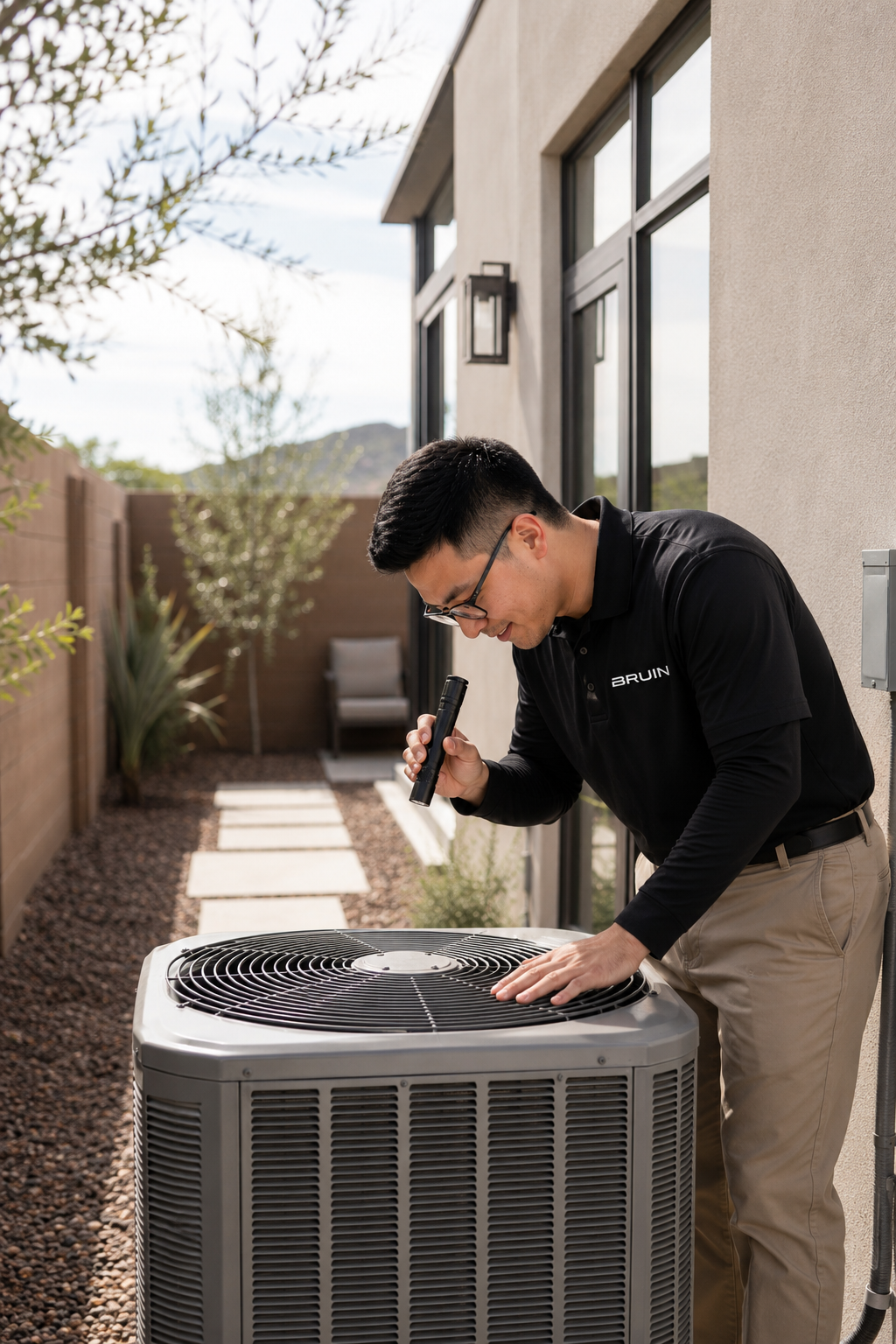


Water heaters should be inspected for leakage, corrosion, improper venting, damaged connectors, and unsafe storage around the unit. Manufacturer instructions should control the maintenance procedure.

Flushing considerations

Sediment can collect in tank-style units. Flushing may help, but older tanks or unfamiliar valves can leak after they are operated. Use a qualified plumber when the unit is aged, corroded, inaccessible, or unfamiliar.

Temperature and pressure relief protection

The relief valve and discharge pipe are critical safety components. Do not cap, plug, or obstruct them. Have questionable installations evaluated promptly.

Continue learning

RELATED MAINTENANCE ARTICLES

PlumbingSeven Plumbing Leak Checks Every Homeowner Can Do
1 min read

Seven Plumbing Leak Checks Every Homeowner Can Do

Inspect common leak points around fixtures, appliances, shutoff valves, and flexible supply lines without opening walls.

Read article
SeasonalFeatured GuideThe Complete Annual Home Maintenance Checklist
1 min read

The Complete Annual Home Maintenance Checklist

A room-by-room and season-by-season maintenance schedule that helps homeowners stay ahead of small issues before they become expensive repairs.

Read the complete guide
HVACHow Often Should You Replace Your HVAC Filter?
1 min read

How Often Should You Replace Your HVAC Filter?

Learn how filter size, pets, allergies, occupancy, and system use affect the right replacement schedule for your home.

Read article